Proper monitoring ensures your compressed air system delivers consistent quality and performance. At Columbus Compressor, our air line and gas monitoring equipment measures critical parameters including pressure, temperature, moisture content, and contaminant levels throughout your distribution network. These systems help identify issues before they affect production, support preventive maintenance efforts, and provide documentation for regulatory compliance.

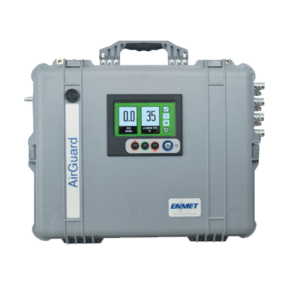
AirGuard

AirGuard™ is a next-generation portable breathing air system which meets NFPA and OSHA Grade D breathing air requirements. It has a large external digital color display and audio alarm, and a data logger for OSHA compliance recordkeeping. It integrates a three-stage filter system with Carbon Monoxide, differential Dew Point and CFM flow sensors. AirGuard™ is available in a variety of CFM capacities, with multi-port line connections and fitting types allowing ease of compatibility with breathing air accessories. AirGuard™ regulates, purifies and monitors supplied breathing air for both safety and comfort.

CO Guard

CO-GUARD is a compact, easy to install and operate compressed airline carbon monoxide monitor that meets OSHA monitoring requirements for Grade D breathing air. The instrument is specifically designed for trouble-free operation, utilizing an electrochemical carbon monoxide (CO) sensor with a life expectancy of up to three years. The CO-GUARD is supplied with a regulator assembly and five foot sample hose, and is factory pre-calibrated. CO-GUARD is designed for use in a wide variety of applications ranging from automotive paint spray operations to wood finishing. This monitor can be used in virtually any commercial or industrial process that requires carbon monoxide monitoring of compressed breathing air for personnel working in such operations.

MedAir 2200

MedAir 2200 is a compact, easy to install and operate compressed airline monitor that can continuously and simultaneously monitor up to four gases in real-time using internally mounted sensors. MedAir 2200 is typically configured to monitor hospital compressed air for carbon monoxide, oxygen and dew point. MedAir 2200 is designed to meet OSHA monitoring requirements for Grade D breathing air, NFPA 99 “Medical Air System Guidelines” and is UL and CSA certified for “Medical Electrical Equipment Safety Requirements” (UL/IEC 60601-1 and CSA 22.2, No. 601-1). MedAir 2200 is ENMET’s most advanced compressed airline monitor for medical air systems, specifically designed for hospital applications.

ProAir 2200

ProAir 2200 is a compact, easy to install and operate compressed airline monitor that can continuously and simultaneously monitor up to four gases in real-time using internally mounted sensors. ProAir 2200 can be custom configured to monitor a variety of hazardous gases present in compressed air, including carbon monoxide, oxygen, dew point, carbon dioxide, VOCs, trace hydrocarbons and many other gases associated with OSHA monitoring requirements for Grade D breathing air. ProAir 2200 is ENMET’s most advanced compressed airline monitor for process or breathing air requirements. It is used in a wide variety of industrial applications from aerospace to pharmaceutical and can be easily adapted to meet your specific needs for compressed airline monitoring.

Frequently Asked Questions About Compressed Air Monitoring and Gas Quality Monitoring

What parameters should I monitor in my compressed air system?

Key measurements include pressure, flow rate, temperature, dew point, oil content, and particulate levels. The specific parameters depend on your application requirements and any applicable industry regulatory standards.

How does monitoring improve system reliability?

Continuous monitoring identifies developing problems before they cause downtime. This allows for scheduled maintenance rather than emergency repairs and helps maintain consistent air quality for your processes.

Can monitoring equipment help reduce operating costs?

Yes, by identifying inefficiencies, leaks, pressure drops, and performance degradation, air system analytics and monitoring systems often pay for themselves through energy savings and reduced maintenance expenses.