

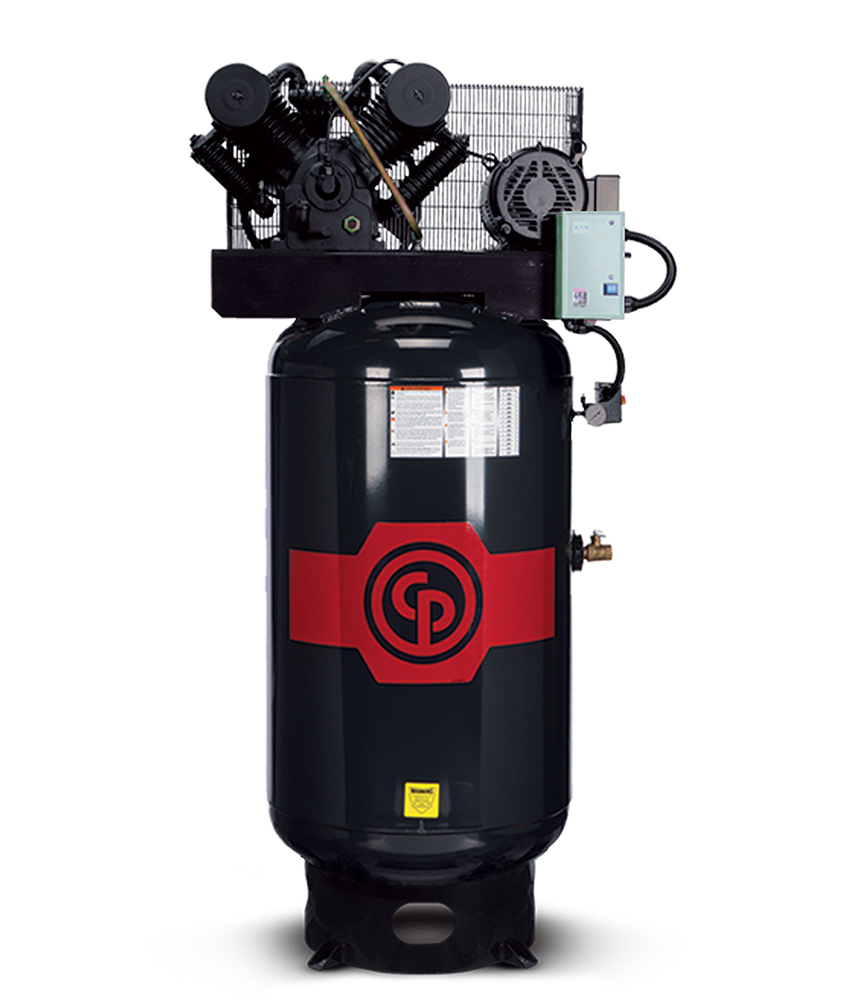
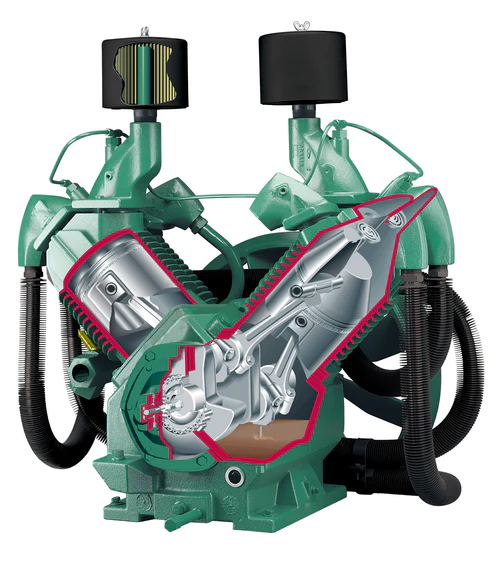
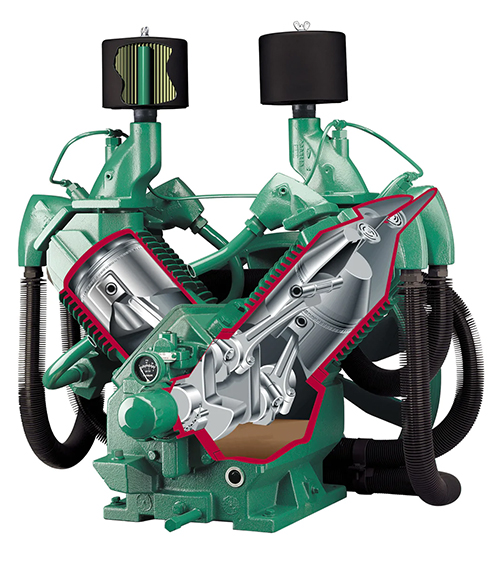
Columbus Compressor also carries reciprocating compressors, which are better suited for smaller-scale applications such as auto repair facilities or tire shops. These cost-effective units rely on a piston-and-valve mechanism rather than a screw system — a more traditional technology that remains highly effective for the right use case. While reciprocating compressors are technically capable of running at 100% duty cycle, they are not as well-suited for continuous operation as their rotary screw counterparts. Where they excel is in intermittent-use environments where budget is a consideration.
Frequently Asked Questions About Our Piston Air Compressors
Reciprocating compressors are excellent for intermittent applications where they can cycle on and off throughout the day. Applications where a rotary screw stops frequently and does not have enough time during the run cycle to maintain operating temperatures can cause maintenance and service life issues. Reciprocating units are also better when budget concerns are a priority.
Reciprocating compressors are well-suited for tire shops, maintenance facilities, and auto repair shops. Larger operations frequently utilize piston compressors to support ancillary tasks like hose reels for truck drivers and similar light-duty functions.
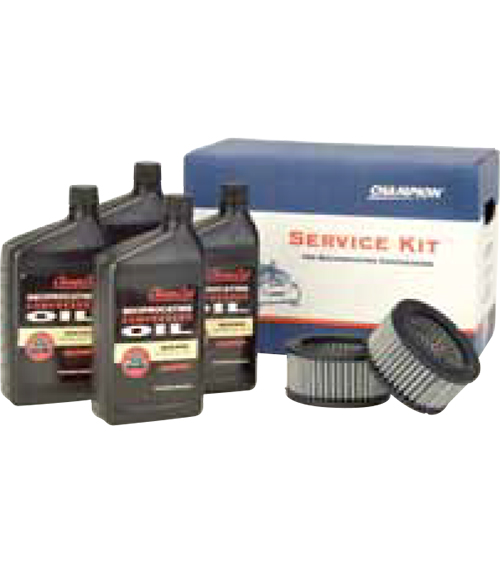
They don't need as much maintenance as rotary screws. There are not as many parts involved, which means less that can go wrong and fewer maintenance requirements.
Most reciprocating compressors only have a one or two-year warranty, so you're looking at a much shorter expected lifespan. But again, it depends on your use of the equipment and maintenance. We often see these last five years, ten years, or longer. Proper system design and sizing, as well as regular maintenance, are the most important factors for any compressor when it comes to lifespan.